Chapter I: The Story & Human Friendship
The Intellectual Genius of the Rainforest Canopy
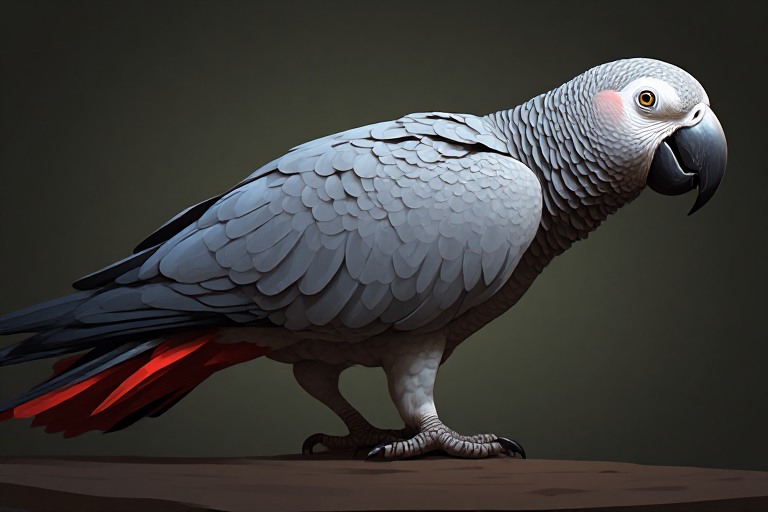
Deep within the lush tropical rainforests of West and Central Africa flies a bird whose intelligence has captivated scientists, historians, and animal lovers for centuries: the African Grey Parrot (Psittacus erithacus).
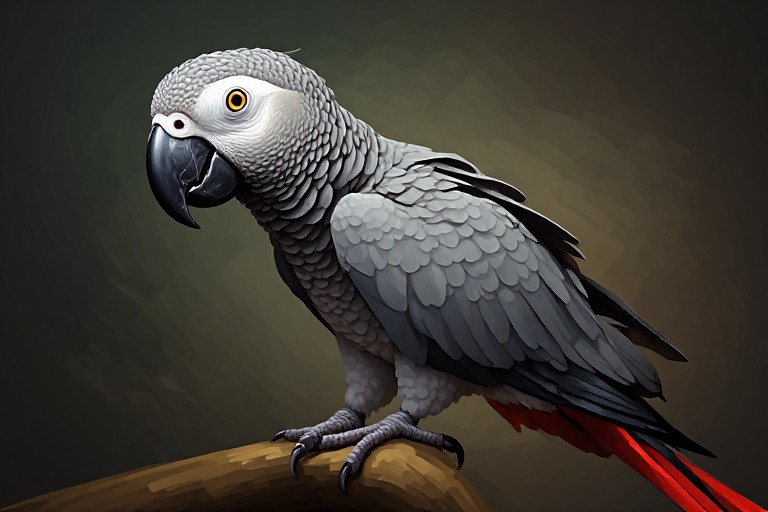
Adorned in sleek slate-grey plumage, a pale ivory beak, striking silver-yellow eyes, and a flash of brilliant crimson red tail feathers, the African Grey is revered as the world’s most intellectually gifted bird.
🧠 The Mind of a Five-Year-Old Child
For decades, people believed parrots merely “parroted” sounds without understanding them. However, groundbreaking scientific research shattered this belief.
Through pioneering cognition studies, scientists proved that African Greys can:
- Understand Abstract Concepts: Identify over 100 objects, colors, shapes, and materials (metal, wood, plastic).
- Count & Calculate: Correctly count objects up to six and understand the numerical concept of zero.
- Express Genuine Communication: Combine words to form original sentences expressing desire, frustration, or affection.
🪶 The Crimson Tail & Powder-Down Feathers
An African Grey’s body is covered in specialized powder-down feathers. These feathers break down into a fine, silky white dust that the parrot uses to groom and waterproof its plumage naturally.
Their vivid scarlet tail feathers serve as vital visual beacons in the wild, allowing flock members to follow each other through dense jungle canopies.
🏡 Creating an Avian Genius Sanctuary
Because an African Grey’s brain requires constant stimulation:
- Foraging Puzzle Toys: Hide nuts and wooden beads inside paper boxes or acrylic puzzles; solving challenges keeps their minds sharp and happy.
- Natural Wood Perches: Avoid smooth plastic perches; varied natural branches prevent foot cramps and keep claws trimmed naturally.
- Daily Out-of-Cage Time: Require several hours of supervised time on a playstand interacting with their human flock.